2017年7月、北朝鮮の国営通信社は、「米国が私たちの最高のリーダーシップを取り除こうとするほんの少しの試みをあえて示すならば、私たちは強力な核ハンマーで米国の中心に容赦ない打撃を与えるでしょう。 、時間の経過とともに研ぎ澄まされ、固められた」[出典:コーエンとスター]。
かつてそれは空のブラスターに過ぎないように見えたかもしれません。しかし、北朝鮮の好戦性は最近、より深刻に受け止められており、30代の独裁者である金正恩が米国の都市を攻撃できる大陸間弾道ミサイル(ICBM)の開発に向けた取り組みを加速させている。 、シカゴの範囲に入れる-北朝鮮が警告を発行した数日後には、それが成功し、それが平坦化された軌道にされていた場合、6500マイル(10400キロ)を旅したかもしれないミサイルを打ち上げデービッド・ライトによると、コ憂慮する科学者同盟の理事。
米国は、朝鮮半島上空で2機のB-1爆撃機を飛行させ、アラスカに本拠を置くターミナル高高度地域防衛(THAAD)ミサイル防衛システムのテストを実施しました。米太平洋空軍司令官のテレンス・J・オショーネシーは、北朝鮮を「地域の安定に対する最も緊急の脅威」と呼んだ[出典:AP通信]。
数週間後、米国のグアム領土を爆撃することを約束した後、北朝鮮は考えを変え、現時点ではミサイルを発射しないと述べた。金正恩は「ヤンキースの愚かで愚かな行動をもう少し見守るだろう」と述べた[出典:チャペル]。
そのような危機が、全体主義の支配者によって課された孤立して何十年も存在してきた、2500万の小さな比較的貧しい国によって引き起こされる可能性があると考えるのは奇妙です。世界で最後に残っている共産主義政権の1つである北朝鮮はどのようにして生き残ったのでしょうか。北朝鮮の独裁者は世界の他の国々に本当に何を望んでいるのか、そしてそれを手に入れるために彼は何をしたいのか?そして、いくつかの壊滅的なシナリオを回避するために、世界の他の地域は何をすべきでしょうか?この記事では、これらの質問などについて説明します。
- 北朝鮮がどのようにして存在したか
- 冷戦が北朝鮮をどのように形作ったか
- 金王朝
- エルミット王国
- 北朝鮮での生活
- 北朝鮮はどのくらいの脅威をもたらしますか?
- なぜ世界は北朝鮮について何かできないのか?
北朝鮮がどのようにして存在したか

北朝鮮がなぜこんなに危険な国際パリアになったのかを理解するためには、北朝鮮の起源を振り返る必要があります。朝鮮半島は何世紀にもわたって地元の王によって統治されていました。しかし、1910年から1945年まで、それは韓国を植民地にしようとした日本帝国の一部でした。それは第二次世界大戦での日本の敗北で終わりました。勝利した米軍は38度線まで半島の南部を占領し、ソビエト軍は北半分を占領しました。東欧と同様に、ソビエトは共産主義体制を確立し、1948年に韓国は2カ国になりました[出典:米国国務省]。
北朝鮮政権を率いるために、ソビエトはあいまいな人物を選びました。金日成は1912年に韓国で金日成に生まれましたが、幼少期のほとんどを中国で過ごしました。イベントの公式バージョンは、彼が日本人に対する抵抗で戦ったというものですが、少なくとも1人の北朝鮮のアナリストは、彼が実際に亡くなった年上のゲリラ指導者の身元と名前を引き継いだと信じています[出典:Quince、サンガー]。
1940年、金日成はソビエト赤軍に加わり、1946年、ソビエト独裁者のヨシフ・スターリンが彼を北朝鮮臨時人民委員会の委員長に任命した。 1948年、ソビエトは彼を北朝鮮の首相にした[出典:Boissonealt ]。彼への国民の支持を築くために、彼らは新しい指導者が日本人に対する抵抗を主導したことを韓国人に納得させるための宣伝キャンペーンを上演した。
しかし、金日成は不安な支配者でした。政権発足後、ソビエトは軍隊を撤退させ、国境に沿って韓国軍との国境小競り合いを繰り返したため、北朝鮮の指導者は、韓国人が彼を倒そうとすると「完全に押しつぶされる」と警告する演説をした。彼は最初に韓国を侵略することによって恐れていた攻撃を先取りするという考えを思いつき、嫌がるソビエトに彼を支援するように話そうとしました[出典:ハヌキ]。しかし、彼が1950年の初めにようやく許可を得たとき、それはほとんど彼のやり直しであることが証明されました。
冷戦が北朝鮮をどのように形作ったか

In June 1950, Kim Il Sung's forces invaded South Korea, catching that nation and its ally the U.S. by surprise. At first, it looked as if he might prevail, but a small contingent of defenders held out in an enclave around Pusan, along the southern edge of Korea. That gave U.S. Gen. Douglas MacArthur time to organize a rescue force that landed at Inchon, near Seoul, in September 1950. MacArthur chased the North Korean forces northward into North Korea, and might have put an end to the North Korean regime and reunified Korea for good. The North Korean dictator begged for Stalin's help, but none came. Then, to the overconfident MacArthur's surprise, the Chinese army jumped into the fray and drove his forces back to the 38th parallel [sources: Brown, Boissoneault].
After two more years of bloody fighting , the two sides finally signed an armistice in 1953 — but not a peace agreement. The Chinese intervention had saved Kim Il Sung, but Chinese leader Mao Zedong had left him hanging for two long days before stepping in. Some experts believe that the fear and uncertainty that the North Korean dictator must have felt forever changed him and his regime. From that point, he viewed the world as a hostile place, where he had no allies that he could really trust [source: Boissoneault].
With his ambitions of ruling all of Korea quashed, Kim Il Sung concentrated on consolidating his power. He purged anyone who might pose a threat, and set up a system in which citizens were grouped into various categories according to political reliability. He wasted some of the economic aid that the Chinese and Soviets provided to build 50,000 statues of himself throughout the country, and erected a museum with 95 halls in Pyongyang to extoll his achievements [source: Independent].
At the same time, Kim Il Sung's animosity toward his perceived external enemies continued. In January 1968, he sent commandos to infiltrate South Korea and stage terror attacks, including a failed attempt to assassinate South Korean President Park Chung Hee. Soon after, the North Korean navy seized a U.S. surveillance ship, the Pueblo, off the North Korean coast, killing one U.S. crew member and seizing another 82 Americans, who were tortured and held captive for 11 months before being released [source: Locker].
What is Juche?
In 1972, Kim Il Sung unveiled a political philosophy known as juche, which he defined as "being the master of revolution and reconstruction in one’s own country." North Korea would reject outside influence, even that of bigger communist countries, and strive to become a self-reliant nation [source: Lee]. But even as the regime espoused that idea, it continued to accept economic aid from other countries.
The Kim Dynasty

Though North Korea isn't a monarchy, it might as well be one. Since the nation's beginning, it has been ruled by members of its founder Kim Il Sung's family. When the Eternal President died from a heart attack in July 1994, his eldest son by the first of his two wives, Kim Jong Il ascended to power. Kim Il Sung reportedly selected him because he seemed more ruthless than his other five siblings and had shown his skills as a propagandist [sources: Quince, Ryall].
Kim Jong Il inherited a North Korea that was in desperate straits. The Cold War had ended and the Soviet Union no longer existed to provide economic support. North Korea suddenly had to start paying for oil and other needed imports, as opposed to exchanging credit. That caused its economy to collapse. A brutal famine ensued, which was made worse by floods and droughts, and 2.5 million people reportedly died of starvation [sources: Quince, Phillips].
In response, Kim Jong Il tried to institute some economic reforms. In 2002, for example, the regime began allowing semi-private markets for goods. But that did little to improve North Koreans' overall standard of living [source: CIA Factbook].
When Kim Jong Il, like his father, died of a heart attack in 2011, his third son, Kim Jong Un, rose to power. (He was picked over the first-born son, Kim Jong Nam, who had fallen into disfavor after he tried to use a fake passport to get into Japan, and the second son, Kim Jong Chul, who wasn't hard-nosed enough.) Kim Jong Un, who claimed his father's title of "Dear Leader," had been educated in Switzerland, and reportedly is a fan of Western pop music and basketball [sources: Quince, Ryall, Taylor].
Nevertheless, Kim Jong Un quickly showed that he could be as brutal as his father and grandfather. In his first five years of rule, he strengthened his hold on power by reportedly ordering the execution of 140 senior members of the country's military, government and party elite. The latter included his own uncle and the country's defense minister, Hyon Yong Choi, who was ripped to pieces by fire from an antiaircraft gun in front of his family and others [source: Kwon and Westcott]. In February 2017, his elder sibling Kim Jong Nam was killed in a Malaysian airport by assassins, whom police say sprayed him with VX, a chemical weapon nerve agent [source: Berlinger].
Cult of Personality
North Korea's propaganda machine has spent decades creating a mythology in which the Kim Il Sung and his successors are portrayed as masterful, almost godlike figures. The original Kim, for example, became known as the "Eternal President" or "Great Leader." State media attributed to him a long list of astonishing feats, including scoring a perfect 300 the first time he went bowling and sinking 11 straight holes-in-one on his first golf outing [source: USA Today]. His successors have both been known as "Dear Leader."
The Hermit Kingdom

Under Kim Il Sung and his successors, the North Korean regime has gone to great lengths to maintain complete control of North Korean society. Political activity, labor unions and independent news media aren't allowed. Radios and TV are pre-tuned to government-controlled stations, and the regime jams foreign broadcasts in an effort to prevent North Koreans from getting information from the outside world.
It's a place where people live in fear of being arrested arbitrarily and tortured by the regime. Some prisoners are executed in grisly public spectacles that the government uses to keep the population docile. Others are sent to join the 80,000 to 120,000 people in the country's network of forced labor camps. In some cases, three generations of family members are sent to these camps to atone for the "sins" of one person [sources: Human Rights Watch, Phillips].
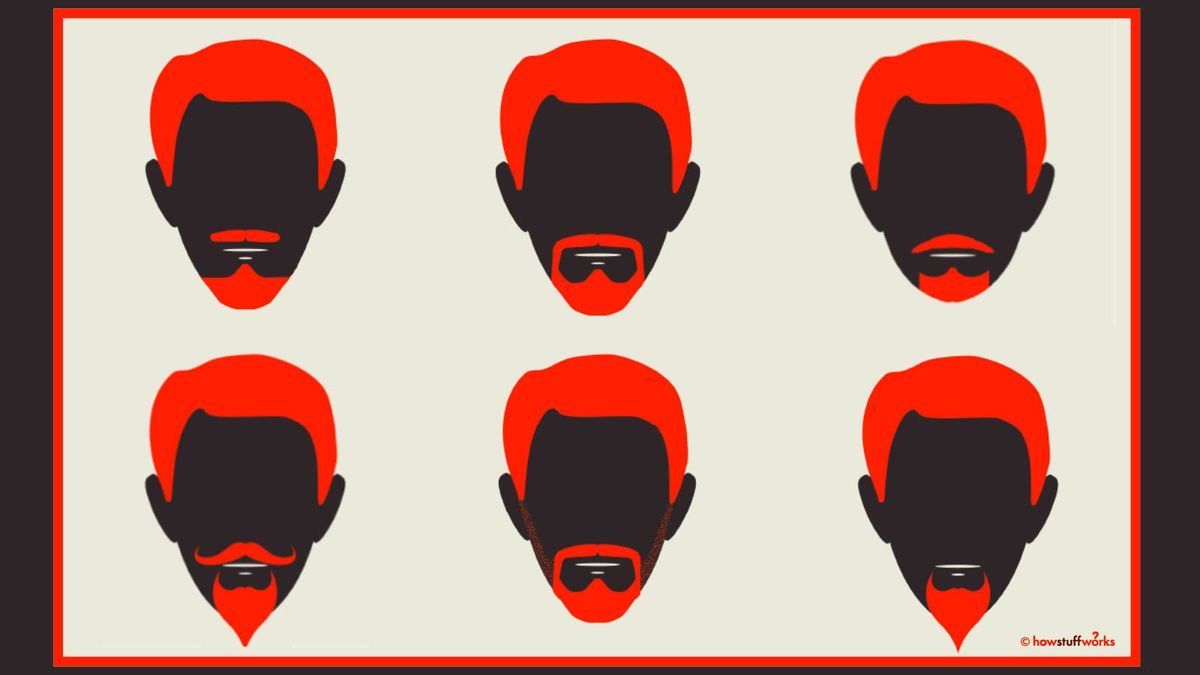
The North Korean regime rules the lives of its citizens so totally that it even dictates what hairstyles they can wear. Women are permitted to choose one of 14 approved styles. Young men are barred from growing their hair longer than 5 centimeters (a little less than 2 inches), while older males are allowed to grow their hair to 7 centimeters (3 inches) [source: Subramanian].
Because of the regime's paranoia about being attacked, North Korea maintains a huge military for its size, with 1.2 million full-time service members and another 7.7 million reservists for a population of 25 million [source: McCafferty]. By contrast, South Korea has 655,000 soldiers and a population of 50 million.
Every Oct. 10 — the anniversary of the founding of the North Korean communist party —the regime stages an immense parade, in which hundreds of trucks and armored vehicles and tens of thousands of soldiers march through the capital city of Pyongyang in an elaborately choreographed demonstration of the nation's military might. In addition to promoting nationalist fervor, it's a show apparently intended to deter the regime's perceived enemies.
How North Koreans Watch Hollywood Movies
As repressive as it is, the North Korean regime isn't entirely successful at keeping out foreign influences. North Koreans who live near the Chinese border, for example, are able to obtain pirated copies of James Bond movies and South Korean TV shows, which they watch with the windows covered to avoid detection. Chinese companies even help them out, by peddling DVD players that have USB inputs, which enable North Koreans to keep a state-approved propaganda disc in the tray in case authorities stop by, even as they're actually watching a Western movie stored on a plug-in drive [source: Hajek].
Life in North Korea

North Korea has farms that grow rice, corn, potatoes, soybeans and other crops, but food production isn't enough to meet the country's needs. Its industrial sector — which includes chemical plants, textile factories and mines — isn't exactly thriving, either. Production dropped by 3.1 percent in 2015, the most recent year for which estimates are available, and its GDP is just $40 billion [source: CIA Factbook].
As result, for ordinary North Koreans , life is very difficult. The life expectancy is around 67 years for men and 74 years for women, significantly lower than on the other side of the 38th parallel (In South Korea, life expectancy is 79 years for men and 85 years for women) [source: CIA Factbook]. Years of chronic food shortages have stunted North Koreans' growth, so that a 2010 study of North Korean defectors found that the men were between 1.9 and 4.3 inches (4.9 and 10.8 centimeters) shorter and 13.2 to 27.6 pounds (6 to 12.5 kilograms) lighter than their South Korean counterparts [source: Choi et al.].
According to author Paul French, Pyongyang suffers chronic power outages due to fuel shortages, so that people often use candles or kerosene lamps to light their homes after dark. In winter, they sleep in their clothes due to lack of heat. The power shortages also mean that elevators in buildings seldom work. And since most people live in high rises of 20 to 40 stories, it can be very difficult to get around if you are enfeebled. "There are stories of old people, who having moved in, have never been able to leave," writes French.
After the workday ends, most ordinary North Koreans must stay behind for the daily "Community Session" and "Learning Session." The Community Session is a time to go over the day's tasks and production goals. The Learning Session is to disseminate party policy and report yourself — or others — for breaking the rules. However, defectors report that attendance has been dropping at these meetings, with little censure, as the party begins to understand that most people need their spare time to hunt for food to buy, and are often ill from malnourishment [source: French].
For those in the communist elite, though, things are considerably better. Kim Jong Un reportedly lives a life of luxury on a private island. "It's like going to Hawaii or Ibiza, but he's the only one that lives there," reported former NBA star Dennis Rodman, after a 2013 visit [source: Ryall].
Sanctions haven't put a crimp in Kim Jong Un's lifestyle. That may be because the regime has developed numerous unsavory sources of income, including drug smuggling and counterfeiting U.S. currency, to buy what it needs to maintain their luxurious lifestyle [sources: Fifeld, Bowden]. But even lesser officials make extra income though corruption, such as stealing some of the gold, silver and nickel produced by North Korean mines and selling it on the Chinese black market [source: Phillips].
How Much of a Threat Does North Korea Pose?

The North Korean regime, eager to deter any attempt by a latter-day Gen. MacArthur to invade the nation and overthrow it, has been stockpiling weapons of mass destruction for decades. Back in 1997, a North Korean army defector told a U.S. Senate subcommittee that the regime had amassed an arsenal that included 5,000 tons (4,536 metric tons) of toxic gas and two or three nuclear warheads, which it was poised to use against U.S. forces. In 2006, Kim Jong Il confirmed that information by staging a test explosion of a nuclear weapon [source: Bowden].
Since then, North Korea has staged several more successful nuclear tests, and its arsenal has grown to between 13 and 30 nuclear weapons, according an April 2017 presentation by David Albright, a former United Nations weapons inspector who now heads the Institute for Science and International Security.
But just because North Korea has nukes, it doesn't necessarily mean that it could use them to attack the U.S. tomorrow. In his presentation, Albright also noted there are reasons to doubt that North Korea has the ability right now to build a nuclear device that will fit atop an ICBM and survive re-entry through Earth's atmosphere so that it can explode over a U.S. city.
But that provides scant comfort. In 2015, another analyst, Jeffrey Lewis of the East Asia Nonproliferation Program at the James Martin Center for Nonproliferation Studies, noted that the North Koreans probably already had the ability to build a miniaturized nuke, but the question was whether the warhead would remain stable upon re-entry or veer off target and perhaps explode over San Jose instead of San Francisco. "That's a problem, of course, but Kim Jong Un might be content with such an outcome," he wrote in the political journal 38 North.
Visiting North Korea
A handful of companies offer American tourists vacation packages to North Korea but it's best not to go. In July 2017, the U.S. government barred all travel by American citizens to North Korea. This was after University of Virginia student, Otto Warmbier, who was with a tour group, was arrested and accused of trying to steal a propaganda poster. He was convicted in 2016 of subversion and sentenced to 15 years in prison. North Korea released him in June 2017, but he came home in a coma and died less than a week later without regaining consciousness [sources: Sewell]. One American who took the trip in 2016 said she was constantly watched by two minders the entire time.
Why Can't the World Do Something About North Korea?

北朝鮮は世界の棘であるが、特に韓国とその同盟国である米国に影響を及ぼしている。しかし残念ながら、どちらの国もあまり影響力を持っていない。過去40年間、一連の米国大統領は北朝鮮に核兵器計画を放棄させるためにあらゆる種類の措置を試みてきた。
米国は、より大きな力を発揮するように設計された軍事演習から、交渉のインセンティブとして凍結された銀行資産の解放を許可することまで、飴と鞭の両方を採用しています。米国はまた、北朝鮮に対する国際制裁を支持し、共産主義の全盛期からの北朝鮮の唯一の同盟国であり、その最も重要な貿易相手国である中国に、その影響力を利用するように説得した[出典:サンガー、フィフィールド、ボーデン]。
残念ながら、これはどれもうまくいきませんでした。そして今、金正恩の不思議な動機は問題をさらに複雑にしている。好戦的な公の脅迫をしたが、彼が買収される可能性があることを知らせるために彼の外交官を静かに送った彼の父とは異なり、最新の親愛なるリーダーは、米国が彼を攻撃する準備ができている限り、彼の核兵器やミサイルを決して交渉しないと言いました。彼は、米国が彼の兵器プログラムを止めるために通常兵器でソウルに壊滅的な攻撃を開始することを恐れすぎていると考えているのかもしれません。
金正恩を止めるためのすべてのオプションには問題があります。ジャーナリストのマーク・ボウデンが最近の大西洋の記事で詳述しているように、北朝鮮のミサイルと核兵器のプログラムを軍事攻撃で阻止することは困難であり、おそらくアメリカと韓国の両方の生活に恐ろしい犠牲を強いるでしょう。キムを暗殺しようとすると、彼の内輪に潜入する必要があります-ほとんど不可能です-そして、後任のリーダーがこれ以上優れているという保証はありません。
2017年8月、国連安全保障理事会は、ICBMの発足に応じて、北朝鮮に厳格な制裁を課すことに全会一致で投票しました。専門家は、平壌に年間10億ドルの費用がかかる可能性があると考えています。これは、貧しい国にとって莫大な金額です。北朝鮮は以前の核活動についてすでに米国、安全保障理事会、欧州連合から制裁を受けていたが、この新しい開発はより広範囲であり、経済的にさらに打撃を与える可能性が高い。その目的は北朝鮮の年間輸出の3分の1を遮断し、キムに核兵器計画を放棄するか、少なくとも交渉する意思があることを余儀なくさせている[出典:テイラー]。しかし、以前の制裁はその効果がなかったので、今回何が起こるかを知るのは難しいです。
多くの詳細情報
著者のメモ:北朝鮮のしくみ
私は1962年のミサイル危機の間、米国とソビエト連邦が戦争の危機に瀕したときに幼稚園にいました。自家用車でラジオを聞いて、ミサイルや弾頭の話を理解しようとしたとき、どれほど怖くて無力だったかを覚えています。何年も後に、核先端のICBMを開発する北朝鮮の努力が、別の世代の子供たちが同じ恐れを経験するかもしれないことを意味すると考えるのは悲しいことです。
関連記事
- 北朝鮮は皮肉を禁止する
- 放射性降下物を生成せずに核兵器をテストすることは可能ですか?
- 北朝鮮は米国を攻撃する準備ができていますか?
- 弾道ミサイルとは何ですか?
その他のすばらしいリンク
- 朝鮮民主主義人民共和国(北朝鮮)の公式ウェブサイト
- 韓国政府のウェブサイト
- 核脅威イニシアティブ
- U.S. Department of State: North Korea Travel Warning
Sources
- ABC News (Australia). "The key players in North Korea's Kim dynasty." Abc.net.au. (July 30, 2017) http://ab.co/2vW7tFm
- Albright, David. "North Korea's Nuclear Capabilities: A Fresh Look." Institute for Science and International Security. April 28, 2017. (July 31, 2017) http://bit.ly/2uOW6kb
- Associated Press. "U.S. Flies Bombers and Tests Missile Defense After North Korea ICBM Launch." Time.com. July 30, 2017. (July 31, 2017) http://ti.me/2vXXRu5
- Berlinger, Joshua. "Kim Jong Nam: The plot to murder North Korea's exiled son." CNN. July 27, 2017. (July 30, 2017) http://cnn.it/2uLF2vg
- Boissoneault, Lorraine. "Why North Korea Needs an Enemy Like America to Survive." Smithsonian. July 28, 2017. (July 31, 2017) http://bit.ly/2uO0hga
- Brown, Gen. John S. "The Korean War: The Chinese Intervention." History.army.mil. 2003. (July 31, 2017) http://bit.ly/2uO7iNT
- Central Intelligence Agency. "East & Southeast Asia: Korea, North." Cia.gov. (July 30, 2017) http://bit.ly/2uLKfU6
- Choi, Seul Ki, etal. "Still life with less: North Korean young adult defectors in South Korea show continued poor nutrition and physique." Nutrition Research and Practice. April 28, 2010. (July 31, 2017) http://bit.ly/2uNAnJh
- Cohen, Zachary and Starr, Barbara. "North Korea promises nuclear strike on US if regime is threatened." CNN. July 25, 2017. (July 31, 2017) http://cnn.it/2uNfUV2
- Cooper, Anderson. "North Korean Prisoner Escaped after 23 Brutal Years." CNN. May 19, 2013. (July 30, 2017) http://cbsn.ws/2uLGrSO
- Fifeld, Anna. "He ran North Korea's secret moneymaking operation. Now he lives in Virginia." Washington Post. July 13, 2017. (July 30, 2017) http://wapo.st/2vWusQO
- Fifeld, Anna. "North Korea fires another missile, its latest step toward putting the U.S. within reach." Washington Post. July 28, 2017. (July 30, 2017) http://wapo.st/2vXRGpz
- French, Paul. "North Korea: State of Paranoia." Zed Books. 2015. (July 31, 2017) http://bit.ly/2uO7iO6
- Grinberg, Emanuella. "McCain: North Korea 'murdered' former detainee Otto Warmbier." CNN. June 20, 2017. (July 31, 2017) http://cnn.it/2vZp4we
- Hajek, Danny. "Watching Foreign Movies Is Illegal In North Korea, But Some Do It Anyway." National Public Radio. July 5, 2017. (July 30, 2017) http://n.pr/2uLEANO
- Hamblin, James. "What Happened to Otto Warmbier?" Atlantic. June 16, 2017. (July 31, 2017) http://theatln.tc/2vZwUGh
- Hanuki, Wada. "The Korean War: An International History." Bowman & Littlefield. 2013. (July 31, 2017) http://bit.ly/2uOnyP5
- Independent. "Profile: His brilliant Korea is a lifetime of lies: Kim Il Sung, Great Leader with the Bomb." Independent. March 27, 1993. (July 31, 2017) http://ind.pn/2uOh8Q4
- Kim, Hyung-jin. "Kim's N. Korea gains a little economically, a lot militarily." Associated Press. July 14, 2017. (July 30, 2017) http://bit.ly/2vX0Z9h
- Kwon, K.J. and Westcott, Ben. "Kim Jong Un has executed over 300 people since coming to power." CNN. Dec. 29, 2016. (July 30, 2017) http://cnn.it/2vW4OvD
- Lee, Grace. "The Political Philosophy of Juche." Stanford Journal of East Asian Affairs. Spring 2003. (July 31, 2017) http://bit.ly/2uOoSBF
- Lewis, Jeffrey. "North Korea's Nuclear Weapons: The Great Miniaturization Debate." 38North.org. Feb. 5, 2015. (July 31, 2017) http://bit.ly/2vZBKU7
- Locker, Ray. "Book reveals new details of N. Korea capture of Pueblo." USA Today. Jan. 1, 2014. (July 31, 2017) https://usat.ly/2uOidXY
- McCafferty, Georgia. "Anniversary parade provides rare glimpse into North Korea's military might." CNN. Oct. 10, 2015. (July 31, 2017) http://cnn.it/2uO3yfq
- Phillips, Tom. "Escape from North Korea: How I escaped horrors of life under Kim Jong-il." Telegraph. Nov. 11, 2014. (July 30, 2017) http://bit.ly/2vWqCY0
- Quince, Annabelle. "The Kims of North Korea: How myth and propaganda sustain a family dynasty." Abc.net.au. Nov. 1, 2016. (July 30, 2017) http://ab.co/2vWciP8
- Ryall, Julian. "Dennis Rodman describes '7-star party' lifestyle of Kim Jong-un." Telegraph. Oct. 21, 2012. (July 31, 2017) http://bit.ly/2uO84uc
- Ryall, Julian. "Kim Jong-Un takes father's title of Dear Leader." Telegraph. Dec. 12, 2013. (July 30, 2017) http://bit.ly/2vWC85p
- Sanger, David E. "Clinton Approves a Plan to Give Aid to North Koreans." New York Times. Oct. 19, 1994. (July 30, 2017) http://nyti.ms/2vWxJzs
- Sanger, David E. "Kim Il Sung Dead at Age 82." New York Times. July 9, 1994. (July 31, 2017) http://nyti.ms/2uO6h8H
- Sewell, Dan. "Cause of Otto Warmbier's death uncertain; family rejects autopsy." Associated Press. June 20, 2017. (July 31, 2017) http://trib.in/2vZFQvt
- Subramanian, Courtney. "These Are North Korea's 28 State-Approved Hairstyles." Time. Feb. 25, 2013. (July 30, 2017) http://ti.me/2vWnhbe
- Taylor, Adam. "The sad story of Kim Jong Chul, the North Korean leader's brother and Eric Clapton megafan." Washington Post. May 22, 2015. (July 31, 2017) http://wapo.st/2vZDM6y
- U.S. Department of State. "U.S. Relations With North Korea." State.gov. Oct. 16, 2016. (July 31, 2017) http://bit.ly/2vYi02S
- USA Today. "20 facts about North Korea." USA Today. April 13, 2013. (July 30, 2017). https://usat.ly/2vW77i9
- Walmart. "Walmart announces Q4 underlying EPS of $1.61 and additional strategic investments in people & e-commerce; Walmart U.S. comp sales increased 1.5 percent." Walmart.com. (July 30, 2017) http://bit.ly/2uLU1Wf
- Wright, David. "North Korean ICBM Appears Able to Reach Major US Cities." Union of Concerned Scientists. July 28, 2017. (July 31, 2017) http://allthingsnuclear.org/dwright/new-north-korean-icbm