Beaucoup de médicaments dont nous dépendons aujourd'hui ont été découverts dans des endroits vraiment dégueulasses. Cette tradition remonte à 1928, quand Alexander Fleming découvrit le tout premier antibiotique, la pénicilline ; de la moisissure tueuse de bactéries se développait dans une boîte de Pétri ouverte qui avait été accidentellement exposée à l'air.
Un autre antibiotique désormais important , la vancomycine , a été découvert pour la première fois en 1952 lorsqu'un missionnaire de Bornéo a envoyé un échantillon de terre de la jungle à un ami, qui se trouvait être un chimiste organique du géant pharmaceutique Eli Lilly [source : Levine ]. Les céphalosporines , une autre classe importante de médicaments antibactériens, ont été découvertes pour la première fois en 1948 dans un égout sarde [source : Tirrell ].
Et vous imaginiez des scientifiques en blouse blanche entourés d'équipements étincelants, n'est-ce pas ?
La recherche de nouveaux antibiotiques a pris une urgence supplémentaire, en raison des avertissements des experts de la santé selon lesquels de nouvelles souches de bactéries sont de plus en plus résistantes à nos médicaments éprouvés. Selon les Centers for Disease Control and Prevention, au moins 2 millions de personnes aux États-Unis sont infectées chaque année par des insectes résistants aux médicaments, et au moins 23 000 d'entre elles en meurent.
C'est pourquoi les scientifiques, dans leur effort exhaustif pour trouver des médicaments de remplacement, cherchent dans des endroits que vous ne soupçonnez pas - de la boue des fonds marins aux cerveaux d'insectes. Voici un aperçu de 10 des sources les plus étranges d'antibiotiques que les chercheurs ont découvertes ces dernières années.
- Cerveau de cafard
- Mucus de poisson-chat
- Sang d'alligator
- Sédiments océaniques
- Peau de grenouille
- Pandas
- Fourmis
- Vieux écrans de télévision LCD
- Marijuana
- Bactéries de la grotte tueuse
10: Cerveau de cafard

Vous pensez peut-être que les cafards sont de vilaines petites créatures, mais ils peuvent éventuellement vous protéger contre certaines maladies encore plus vilaines. Dans une étude publiée en 2010, des chercheurs de l'Université britannique de Nottingham ont rapporté qu'ils avaient utilisé un extrait de cerveaux de cafards et de criquets broyés pour tuer plusieurs microbes différents, dont une souche d' Escherichia coli (E. coli) connue pour provoquer une méningite bactérienne, une infection cérébrale potentiellement mortelle et le Staphylococcus aureus résistant à la méthicilline (SARM) [source : Svalavitz ].
L'efficacité de l'extrait contre le SARM était particulièrement une bonne nouvelle, car la soi-disant « superbactérie » est résistante à la plupart des antibiotiques existants. Selon le co-auteur de l'étude, Naveed Khan, lui et ses collègues ont eu l'idée d'étudier les insectes parce qu'ils se demandaient comment ils faisaient face à toutes les bactéries et parasites trouvés dans leur habitat habituel des drains remplis d'eaux usées [source : Svalavitz ].
9: Mucus de poisson-chat

En tant que mangeoires de fond qui s'enracinent dans la boue pour que les petites créatures puissent les manger, les poissons- chats sont continuellement exposés à toutes sortes de micro-organismes pathogènes. Mais cela ne semble pas leur faire beaucoup de mal, ce qui a éveillé la curiosité des scientifiques. Finalement, ils ont découvert que le mucus visqueux que le poisson-chat sécrète sur sa peau les protège contre les insectes qu'ils rencontrent dans leur environnement.
Dans une étude publiée dans le World Applied Sciences Journal en 2011, des chercheurs indiens ont recueilli du mucus épidermique de poissons-chats capturés dans la région côtière de Parangipettai de ce pays et l'ont testé contre 10 types différents de bactéries pathogènes et 10 champignons différents. Les chercheurs ont découvert que le mucus était très efficace pour inhiber la croissance de divers microbes dangereux pour l'homme, dont E. coli et Klebsiella pneumoniae , qui attaquent les poumons [source : Anbuchezhian, et al. ].
8: Sang d'alligator

Beaucoup de gens ont peur des alligators et pour cause : leurs dents sont acérées ! Les scientifiques, cependant, s'intéressent au puissant système immunitaire des créatures, qui les aide à se remettre des blessures subies lors de combats territoriaux avec d'autres alligators. Ils voient les alligators comme une source potentiellement précieuse de nouveaux antibiotiques puissants qui pourraient être utilisés pour combattre les infections associées aux ulcères diabétiques et aux brûlures graves, ainsi que les superbactéries.
In 2008, a study by researchers from McNeese State University and Louisiana State University found that proteins extracted from gators' white blood cells were capable of killing a wide range of bacteria that threaten humans, including the notoriously drug-resistant MRSA [source: Marsh and Bernstein]. McNeese researchers now are trying to replicate one particular alligator blood protein that reportedly attaches, Velcro-like, to the surface of a microbe and then tears a hole in its outer wall to kill it [source: Giovinco].
7: Ocean Sediment

Anthrax, a microbe that can cause a victim to develop a fatal buildup of fluid in the lungs, is something that we're all afraid of, and for good reason. When some malicious person sent a bunch of letters tainted with anthrax through the mail in 2001, 11 people were hospitalized, and five of them ended up dying [source: NIH].
And although anthrax infections can be treated with existing antibiotics such as ciprofloxacin, there's always the possibility that terrorists might create a strain resistant to those drugs. That's one reason why researchers at the Scripps Center for Marine Biotechnology and Biomedicine, working in conjunction with San Diego-based Trius Therapeutics, were excited about the discovery of a new compound, anthracimycin, that initial testing showed to be a potent killer of both anthrax and MRSA. Anthracimycin, oddly enough, is produced by a microorganism that the researchers discovered lurking in ocean sediments, just off the shores of Santa Barbara, Calif. [source: Aguilera].
Peut-être parce qu'elle provient d'un endroit aussi improbable, la structure chimique de l'anthracimycine est très différente de celle des antibiotiques existants [source : Redfern ]. Cela pourrait rendre beaucoup plus difficile pour les microbes d'y devenir résistants.
6 : Peau de grenouille

Ils peuvent sembler un peu comiques avec ces grands yeux exorbités et leurs longues langues, mais ne laissez pas leur apparence vous tromper. Les grenouilles , qui existent depuis 300 millions d'années et semblent prospérer même dans les cours d'eau pollués, sont des animaux incroyablement résistants et résistants. (Bien qu'il y ait eu une épidémie de décès dus à des champignons.) C'est pourquoi les chercheurs ont commencé à considérer la peau de grenouille - ou plutôt les produits chimiques qui s'y trouvent - comme une source potentielle de nouveaux antibiotiques pour protéger les humains contre les maladies.
In 2010, researchers at United Arab Emirates University reported at a meeting of the American Chemical Society that after studying 6,000 different frog species, they had identified more than 100 potentially bacteria-killing substances that eventually might be developed as drugs. Developing antibiotics from chemicals on frog skin is a tricky feat, because some of the chemicals can be toxic to human cells as well as bacteria. The researchers are trying to get around that problem by subtly altering the chemicals' molecular structure to make them less dangerous for people, while still retaining their bacteria-killing properties [source: BBC News].
5: Pandas

With those large, chubby bodies and black-and-white faces that appear to have a big smile etched into them, pandas seem like the epitome of cute and cuddly. But researchers at China's Nanjing Agricultural University, who studied the endangered animals ' DNA, found that their blood contains a powerful antibiotic compound called cathelicidin-AM, which helps to protect them against bacteria and fungi.
The chemical is so potent that it can kill bacteria in less than an hour, about a sixth of a time that it takes most familiar antibiotic drugs to do the job. Researchers are now trying to figure out how to turn the chemical into a drug that would work in humans. Fortunately for pandas, whose numbers in the wild are down to an estimated 1,600, scientists don't actually need to extract the substance from actual panda blood. They can make a synthetic version in the lab [source: Roberts].
4: Ants

Les fourmis coupeuses de feuilles sud-américaines sont surtout connues pour leur force époustouflante , comme en témoigne leur capacité à traverser la forêt tropicale tout en transportant des sections de feuilles deux fois plus grandes. Mais c'est le pouvoir des minuscules créatures de contrecarrer les microbes qui intéresse encore plus les chercheurs en médicaments. Tout est lié à la façon dont les fourmis préparent leur nourriture en transportant les feuilles sous terre, où elles se décomposent et forment un jardin de champignons qui fournit des nutriments à leurs larves et à leur reine.
Pour protéger leur repas des microbes et parasites indésirables, les fourmis ont développé une bactérie productrice d'antibiotiques sur leur corps. Des chercheurs britanniques ont découvert que les fourmis produisent et utilisent en fait plusieurs antibiotiques, d'une manière similaire aux médecins qui utilisent la polychimiothérapie pour traiter les infections chez l'homme.
One of the chemicals produced by the ants is similar to an antifungal drug already used in modern medicine. But researchers also have hopes of discovering completely new substances that could be useful in fighting human disease [sources: JIC, Science Daily].
3: Old LCD Television Screens

Some people think that too much television rots your brain , but there may be an upside to the much-maligned medium. Old TV sets could eventually play a role in protecting you from dangerous infections.
Researchers at the University of York in England reported in 2010 that they had discovered a way of transforming a chemical compound used in making liquid crystal display (LCD) sets into an antibacterial substance. The chemical from the sets, polyvinyl-alcohol or PVA, was found to destroy microbes such as E. coli and some strains of Staphylococcus aureus.
In order to convert the chemical waste into an antibiotic, researchers heated and cooled the PVA, then dehydrated it with ethanol. Next, they added silver nanoparticles to enhance its antimicrobial properties. Researchers may use the chemical to develop antimicrobial cleaning products that could reduce hospital patients' risk of infection [source: Science Daily].
2: Marijuana

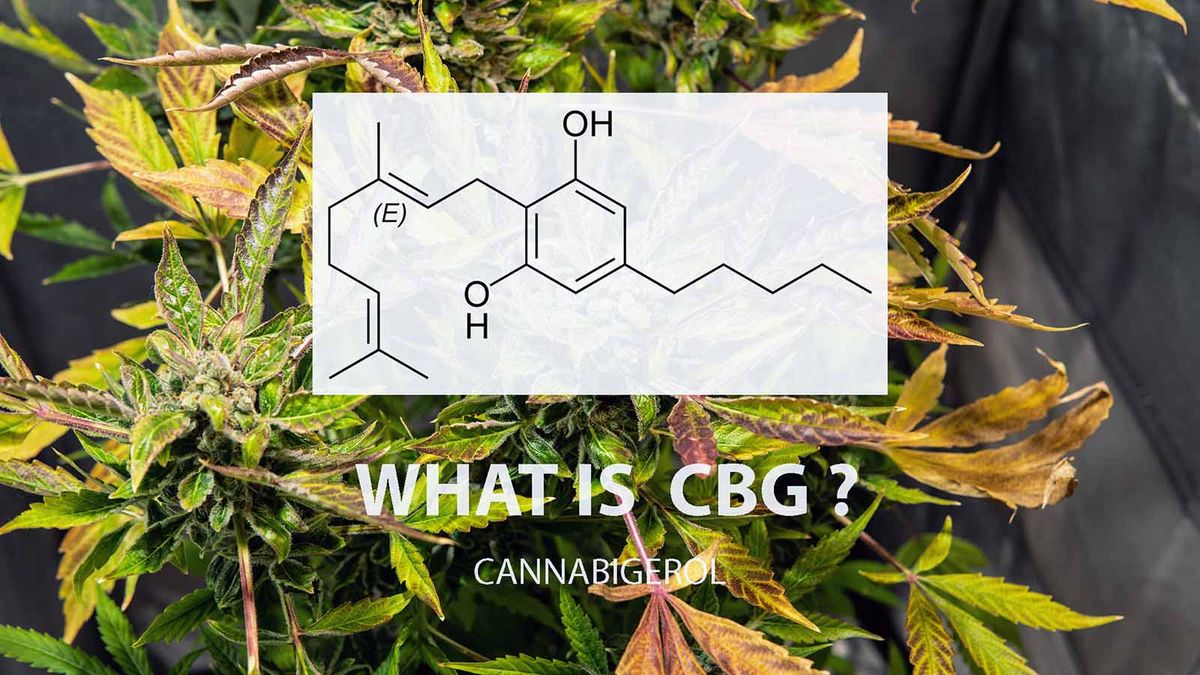
La marijuana a été légalisée dans de nombreux États américains à des fins médicales , telles que le soulagement des nausées et le traitement de l'anxiété. Mais il est également possible que le Cannabis sativa, la plante à partir de laquelle la marijuana est produite, ait également des propriétés antibactériennes.
In 2008, researchers in Italy and Great Britain reported that five different chemicals extracted from marijuana were effective in killing MRSA. The cannabinoids, as the chemicals are called, attacked the microbes in a manner that was different from conventional antibiotics, which suggests that they might work on other germs that have developed drug resistance as well.
At least two of the cannabinoids don't have mood-altering effects, so there may be a way to use them without getting patients stoned in the process [sources: Schultz, Wilbert].
1: Killer Cave Bacteria

Remote Lechuguilla Cave, which lies 1,600 feet (488 meters) below New Mexico's Carlsbad Caverns, is the deepest limestone cave in the U.S. The cave's more than 136 miles (220 kilometers) of underground passages form one of the planet's most sprawling subterranean networks.
But it's not just the cave's size or its breathtaking 20-foot (6-meter)- tall gypsum chandeliers and other exotic rock formations that fascinate scientific researchers. The cave is also home to an assortment of rock-eating bacteria that feed on the sulfur, iron and manganese deposits found inside [source: National Parks Service].
Scientists have been collecting samples of these microorganisms in an effort to find new potential antibiotics. One promising example is a microscopic predator that goes after other bacteria. Scientists hope that one of these microorganisms may extend the life of Cubicin, currently a drug of last resort against MSRA [source: Tirrell].
Lots More Information
Author's Note
It's been scary to watch as diseases that we thought had been conquered by antibiotics suddenly come roaring back with new, drug-resistant vigor. I read recently, for example, that the sexually-transmitted disease gonorrhea has grown resistant to nearly every antibiotic that's been used against it, so that the last remaining line of defense is ceftriaxone, followed with an oral dose of either zithromycin or doxycycline. If that treatment stops working, we're in big trouble. That's why, in my view, we have to resist the urge to trim government funding for medical research, in the interests of reducing government red ink. Instead, we should be providing stronger backing to researchers who are trying to find new antibiotics, which is a difficult and time-consuming process.
Related Articles
- 10 Most Profitable Drugs
- 10 Types of Heart Drugs
- How do bacteria communicate?
Sources
- Aguilera, Mario. "Compound Discovered at Sea Shows Potency against Anthrax." Scripps Institution of Oceanography. July 17, 2013. (Jan. 20, 2014) https://scripps.ucsd.edu/news/anthracimycin-compound-shows-promise-anthrax
- Anbuchezhian, Ramasamy, C. Gobinath and S. Ravichandran."Antimicrobial Peptide from the Epidermal Mucus of Some Estuarine Cat Fishes." World Applied Sciences Journal. 2011. (Jan. 19, 2014.) http://www.idosi.org/wasj/wasj12(3)/3.pdf
- Appendino, G. et al. "Antibacterial cannabinoids from Cannabis sativa: a structure-activity study." Journal of Natural Products. August 2008. (Jan. 19, 2014) http://www.ncbi.nlm.nih.gov/pubmed/18681481
- BBC News. "Frog skin may help beat antibiotic resistance." BBC News. Aug. 26, 2010. (Jan. 19, 2014) http://www.bbc.co.uk/news/health-11101278
- Dotinga, Randy. "Gator Blood May Be New Source of Antibiotics." Washington Post. April 7, 2008. (Jan. 19, 2014) http://www.washingtonpost.com/wp-dyn/content/article/2008/04/07/AR2008040701042.html
- Ehrenberg, Rachel. "Cockroach brains, coming to a pharmacy near you." Science News. Sept. 10, 2010. (Jan. 19, 2014) https://www.sciencenews.org/article/cockroach-brains-coming-pharmacy-near-you
- Giovinco, Dr. Joette. "Is Alligator Blood a Human Life-Saver?" Fox 13. May 20, 2013. (Jan. 19, 2014) http://www.myfoxtampabay.com/story/21789164/2013/03/25/is-alligator-blood-a-human-life-saver
- John Innes Centre News. "Ants and Antibiotics." Jic.ac.uk. Aug. 31, 2013. (Jan. 20, 2014) http://news.jic.ac.uk/2013/08/ants-and-antibiotics/
- Levine, Donald P. "Vancomycin: A History." Clinical Infectious Disease. Jan. 1, 2006. (Jan. 20, 2014) http://cid.oxfordjournals.org/content/42/Supplement_1/S5.full.pdf
- Marsh, Charmayne and Bernstein, Michael. "Alligator Blood May Put the Bite on Antibiotic-Resistant Infections." Eurekalert.org. April 6, 2008. (Jan. 19, 2014) http://www.eurekalert.org/pub_releases/2008-04/acs-abm031108.php
- National Institute of Allergy and Infectious Diseases. "Anthrax." Niaid.nih.gov. Sept. 30, 2013. (Jan. 20, 2014) http://www.niaid.nih.gov/topics/anthrax/Pages/default.aspx
- National Parks Service. "Lechuguilla Cave." Nps.gov. Jan. 13, 2014. (Jan. 20, 2014) http://www.nps.gov/cave/naturescience/lechuguilla_cave.htm
- Redfern, Simon. "New antibiotic that attacks MRSA found in ocean microbe." BBC News. July 31, 2013. (Jan. 19, 2014) http://www.bbc.co.uk/news/science-environment-23523507
- Rennie, John. "Filthy Places for Antibiotics." PLOS.org. Sept. 7, 2010. (Jan. 19, 2014) http://blogs.plos.org/retort/2010/09/07/filthy-places-for-antibiotics/
- Roberts, Christine. "Pandas may be source of new antibiotics: report." New York Daily News. Dec. 31, 2012. (Jan. 19, 2014) http://www.nydailynews.com/life-style/health/pandas-source-new-antibiotics-report-article-1.1230657#ixzz2quKn5djT
- Schultz, Nora. "A New MRSA Defense." MIT Technology Review. Sept. 12, 2008. (Jan. 20, 2014) http://www.technologyreview.com/news/410815/a-new-mrsa-defense/
- Science Daily. "Ants Use Multiple Antibiotics as Weed Killers." Science Daily. Aug. 26, 2010. (Jan. 20, 2014) http://www.sciencedaily.com/releases/2010/08/100826122629.htm
- Science Daily. "LCD Television Waste Could Help Prevent Bacterial Infections." Science Daily. June 20, 2010. (Jan. 19, 2014) http://www.sciencedaily.com/releases/2010/06/100618141651.htm
- Szalavitz, Maia. "New Weird Source of Antimicrobial Drugs: Cockroach Brains?" Time.com. Sept. 17, 2010. (Jan. 19, 2014) http://healthland.time.com/2010/09/17/new-weird-source-of-antimicrobial-drugs-cockroach-brains/
- Tirrel, Meg. "Cave Explorer chasse les antibiotiques à 1 600 pieds de profondeur." Actualités Bloomberg. 27 février 2013. (20 janvier 2014) http://www.bloomberg.com/news/2013-02-27/cave-explorer-hunts-antibiotics-1-600-feet-down-health.html
- Wilbert, Caroline. "Les produits chimiques dans la marijuana peuvent combattre le SARM." WebMD. 4 septembre 2008. (20 janvier 2014) http://www.webmd.com/news/20080904/marijuana-chemicals-may-fight-mrsa